
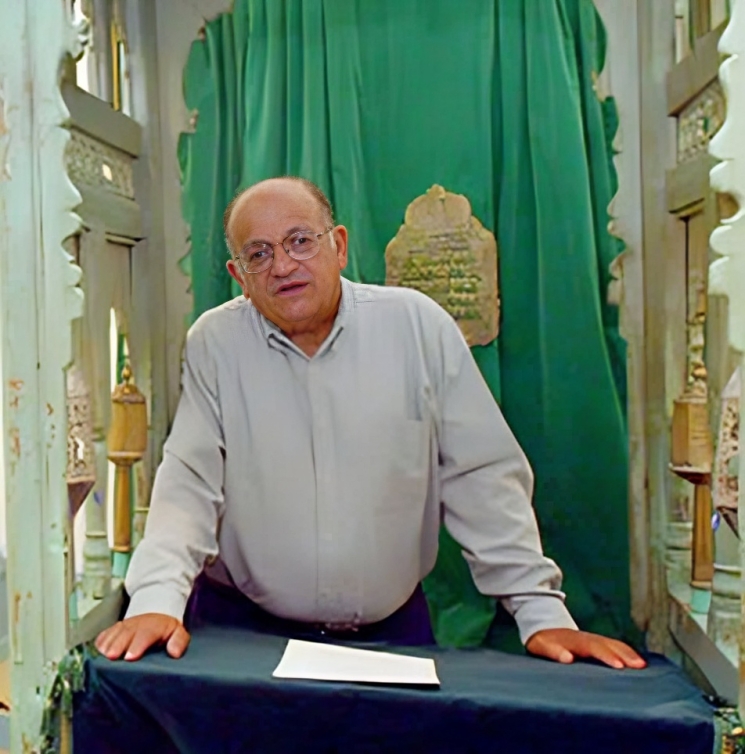
Simon Lévy was a Moroccan Jewish intellectual, scholar, activist, and leading figure in the preservation of Morocco’s Jewish heritage. Born in Fez in 1934, he was a Hispanist, a scholar specializing in Spanish language and culture, a university professor, and one of the central figures behind the Museum of Moroccan Judaism in Casablanca. He passed away on December 1, 2011. Beyond his academic career, Lévy was widely known for his political and civic engagement, his commitment to preserving Morocco’s cultural diversity, and his support for Association Mimouna .
Lévy became involved in communist activism in 1954, initially through student movements. He later joined the Party of Progress and Socialism (PPS), where he was among its early militants. His political engagement, like his academic work, was deeply rooted in his attachment to Moroccan culture and identity. Throughout his life, he consistently affirmed his belonging to Morocco and viewed Jewish history as an inseparable part of Moroccan national history.
During his graduate studies, Lévy focused on the Rif War under the reign of Alfonso XIII. He later completed his doctoral dissertation in 1990, entitled The Arabic Dialects of Moroccan Jews: Specific Features and Borrowings. History, Sociolinguistics, and Dialect Geography. This work reflected his strong interest in sociolinguistics, language contact, and cultural interaction.
Lévy devoted much of his research to Arabic-Spanish relations, Hispanism, and Moroccan dialectology. He was a professor in the Spanish Language Department at Mohammed V University in Rabat, where he worked extensively on the historical and linguistic links between Spanish and Moroccan Arabic. He emphasized the importance of Spanish in understanding certain features of the Moroccan lexicon, illustrating how geography, history, and politics shape linguistic exchanges between neighboring societies over time.
He paid particular attention to periods of bilingualism experienced by different Moroccan communities and to the influence of Spanish language and culture in Morocco. Lévy also maintained strong intellectual connections with Spanish scholars, particularly in Zaragoza, where he conducted a significant part of his research outside Morocco.
Known for his discreet and distinctive personality, Lévy had a unique working style. He preferred handwriting to digital tools and often wrote using a mixture of Arabic and Hebrew. His research involved extensive fieldwork among Jewish communities across Morocco, including Fez, Meknes, Rabat, Salé, Sefrou, Tafilalt, Marrakech, Essaouira, and other regions. His aim was to document and preserve fading memories, linguistic diversity, oral traditions, and regional histories.
At the heart of this work was a conviction that remained constant throughout his life: the history of Morocco’s Jewish communities was not a separate history, but an integral part of the history of Morocco itself.
Lévy identified and analyzed the remarkable diversity of Judeo-Moroccan dialects, highlighting both their regional variations and the characteristics they shared. He examined how centuries of interaction, adaptation, and coexistence shaped these languages while preserving distinctive Jewish elements connected to religious and cultural traditions. Through this work, he helped document a linguistic world that was rapidly changing as Moroccan Jewish communities became increasingly dispersed around the world.
Beyond academia, Simon Lévy was known for his moral integrity, intellectual rigor, and strong convictions. He influenced generations of students and colleagues through his critical thinking and his insistence on careful research and historical evidence. His intellectual and civic engagement reflected a broader commitment to social justice and human rights, including his belief in the rights of the Palestinian people, alongside his deep attachment to Morocco and his commitment to the country’s cultural and religious diversity.
Lévy also took a strong interest in Moroccan political history, particularly in the figure of Abdelkrim El Khattabi, to whose legacy he devoted significant intellectual and memorial efforts. His commitment extended to public service: he served as a city councilor in Casablanca, participated in the Green March, and strongly supported Morocco’s territorial integrity. Throughout his life, his academic, civic, and political engagement remained closely connected to his profound sense of Moroccan belonging.
Lévy was also an important figure in Moroccan-Spanish intellectual and cultural dialogue. Through his academic work and relationships with Spanish scholars and institutions, he contributed to a deeper understanding of the historical connections between Morocco and Spain and worked to strengthen cultural dialogue between the two countries.
His most enduring legacy, however, remains his extraordinary commitment to the preservation of Moroccan Jewish heritage. As Secretary General of the Foundation of Moroccan Jewish Cultural Heritage and Director of the Museum of Moroccan Judaism in Casablanca, Lévy played a crucial role in documenting and safeguarding synagogues, cemeteries, ritual objects, archives, traditions, and communal memory.
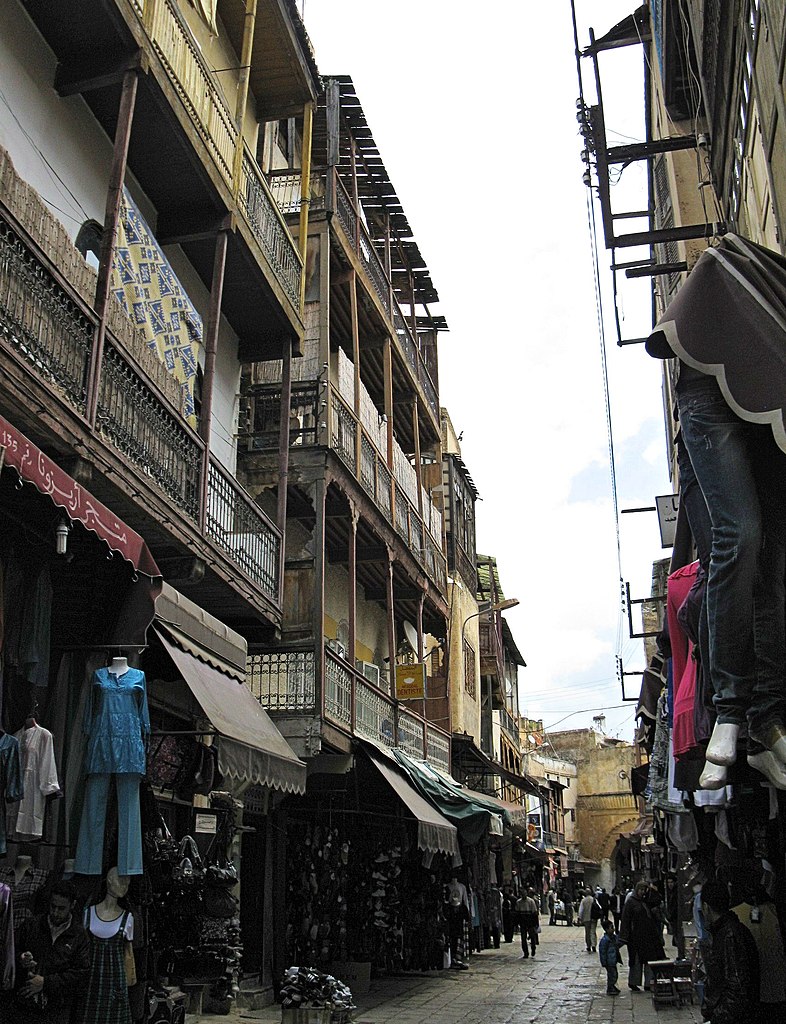
He was closely involved in efforts to preserve and restore important Jewish heritage sites, including the Slat Al Fassiyine and Ibn Danan synagogues in Fez, the city of his birth and a place to which he remained deeply attached. For Lévy, preserving these places was not simply about protecting monuments from the past. It was about ensuring that the centuries-long Jewish presence in Morocco remained visible and understood as part of the country’s collective memory.
His vision continues to resonate strongly with the work of Association Mimouna. Lévy understood that preserving Moroccan Jewish heritage required more than nostalgia: it required research, documentation, education, transmission, and the involvement of new generations. His support for Mimouna reflected his belief in the importance of ensuring that young Moroccans could discover and take responsibility for this shared history.
Simon Lévy dedicated much of his life to studying, documenting, and preserving Morocco’s Jewish history and heritage. As a scholar, activist, educator, and guardian of Moroccan Jewish memory, he helped establish a deeper understanding of Jewish history as an integral part of Morocco’s national story. His research, his work in heritage preservation, and his commitment to transmitting this history to new generations remain an important part of his legacy.
.svg)



.svg)
.svg)
.svg)


.svg)
.svg)